Air Fryer Reheating Guide: Best Temps for Crispy Leftovers (2026)
As an Amazon Associate I earn from qualifying purchases. Prices and availability are accurate as of the date/time indicated and are subject to change.
🔍 How this guide was put together (Editorial Standards)
This guide compares options using published manufacturer specifications, patterns in publicly visible owner reviews, and reputable expert sources. We do not operate a physical testing lab; see our how-we-research page for details.
EDITOR'S PICKS
Top Picks


📑 Table of contents
The microwave is fast, but it turns crispy food to rubber and pizza crust to a floppy, steamy mess. The air fryer fixes exactly that problem: it reheats with circulating dry hot air, so the outside re-crisps while the inside warms through. The catch is that most people reheat too hot — they treat it like cooking from raw and scorch the outside before the middle is warm. Reheating is a lower-and-slower job than cooking, and the numbers below reflect that.
The one rule that makes reheating work
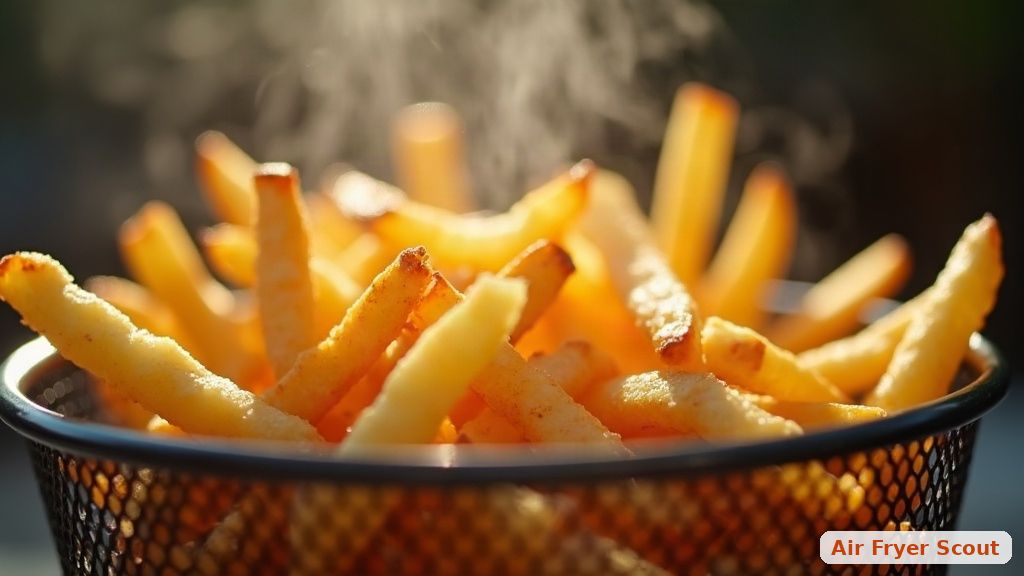
You are warming food that is already cooked, so your goal is to hit a safe internal temperature (the USDA guidance for reheating leftovers is 165°F / 74°C) while restoring texture — not to brown from scratch. That means:
- Drop the temp vs the original cook: most leftovers reheat best at 320–360°F (160–182°C), not the 400°F you’d cook them at.
- Single layer, don’t crowd. Overlapping pieces steam instead of crisp. Spread them out — this is where a roomy basket earns its counter space.
- Check early, shake once. Reheat times are short; pull food the moment it’s hot and crisp rather than running a fixed timer.
Reheating times and temperatures by food
| Leftover | Temp | Time | Note |
|---|---|---|---|
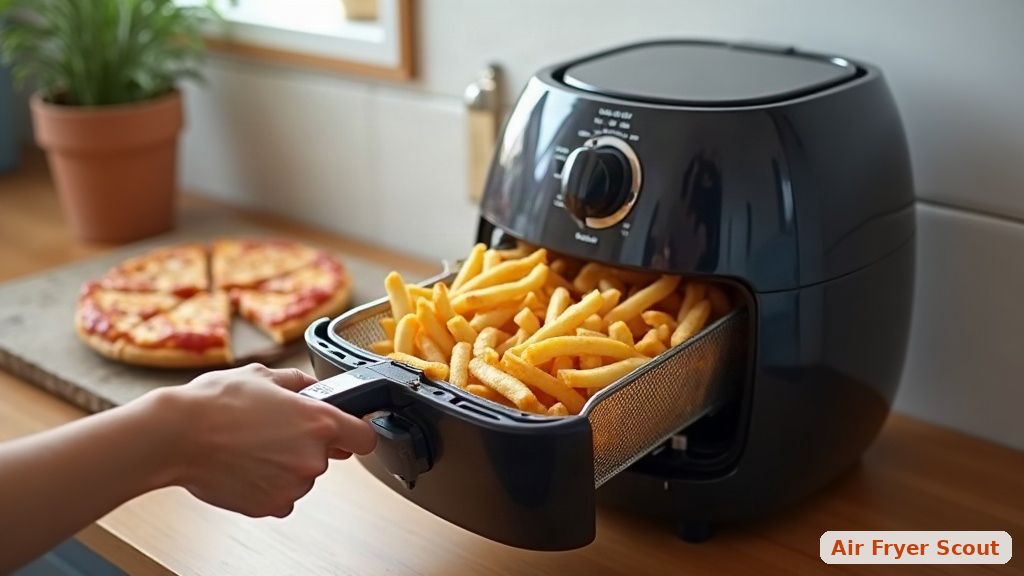
| French fries / tots | 350°F (177°C) | 3–5 min | Shake halfway; no oil needed |
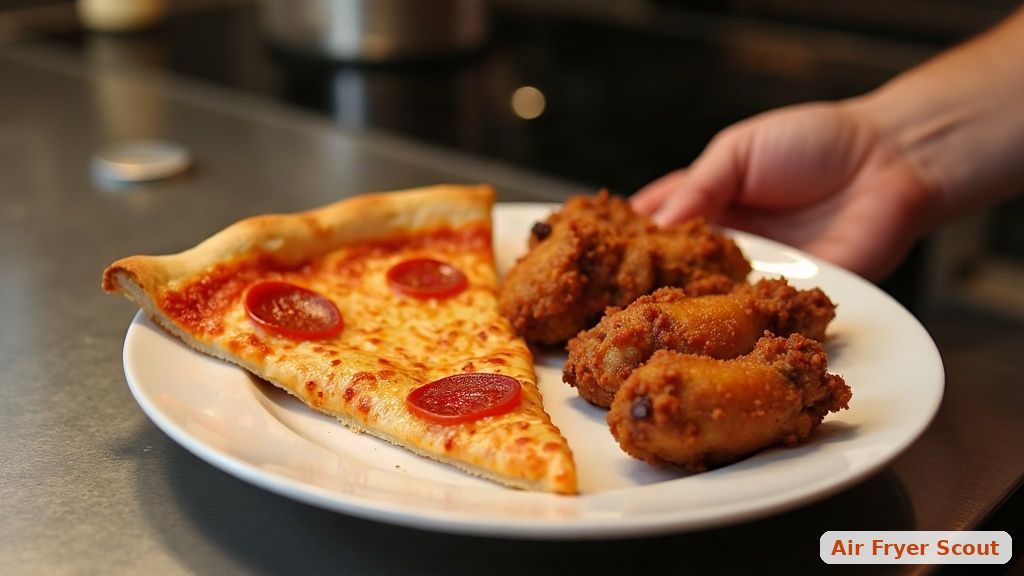
| Pizza (1–2 slices) | 350°F (177°C) | 3–4 min | Crust crisps, cheese re-melts |
| Fried chicken | 350°F (177°C) | 4–6 min | Skin re-crisps; check 165°F inside |
| Roast/rotisserie chicken | 330°F (166°C) | 4–5 min | Lower temp keeps it from drying |
| Chicken nuggets / wings | 360°F (182°C) | 4–5 min | Great texture recovery |
| Steak (medium) | 350°F (177°C) | 3–4 min | Rest after; don't over-reheat |
| Pizza rolls / spring rolls | 350°F (177°C) | 4–5 min | Crispier than the microwave |
| Roasted vegetables | 350°F (177°C) | 3–4 min | Restores caramelized edges |
| Burger patty | 350°F (177°C) | 3–4 min | Reheat bun separately, 1 min |
| Baked goods (pastry) | 320°F (160°C) | 2–3 min | Low and short — they scorch fast |
Times assume food is refrigerator-cold, not frozen. For frozen leftovers, add 2–4 minutes and consider a 30-second “thaw” pass at a lower temp first.
Why does the air fryer beat the microwave for leftovers?
A microwave heats by exciting water molecules, which produces steam — great for warming soup, terrible for anything that was crispy, because steam softens the surface. The air fryer’s moving hot air drives moisture off the surface, so a fry or a crust dries back out and re-crisps. That single mechanical difference is why the same slice of pizza comes out floppy from one appliance and crisp from the other.
Do you need to preheat before reheating?
Usually no. For short reheats (under 5 minutes) the ramp-up time is a meaningful share of the total, so preheating barely helps and can overcook edges. Just add a minute to the times above if your model runs cool. For thicker items like a bone-in chicken thigh, a 2-minute preheat gives a more even result. Our full preheating guide covers when it actually matters.
Should you add oil when reheating?
Almost never. Leftovers already carry their own fat, and a dry basket is what re-crisps the surface. The exception is very lean, dried-out food (day-old roast vegetables), where a light spritz helps. If food is sticking, that’s a liner or basket issue, not an oil one — see our take on basket liners.
Common reheating mistakes
- Reheating at the cooking temp (400°F). The outside burns before the center warms. Drop to the 320–360°F band.
- Piling food in. A crowded basket steams. Reheat in batches or use a roomy single basket so everything sits in one layer.
- Walking away. Reheats are fast and there’s no thermal buffer like a big oven — check at the halfway mark.
- Reheating saucy food uncovered too long. Wet dishes (pasta bake) do better with a loose foil cover for the first half; see when foil is safe.
📚 Related In-Depth Analysis
- Compare findings with our guide on Can You Use Foil In An Air Fryer.
- Compare findings with our guide on Air Fryer Vs Microwave.
📚 Related In-Depth Analysis
- Compare findings with our guide on Ceramic Air Fryer Non Toxic.
- Compare findings with our guide on Why Is My Air Fryer Smoking.
🔧 Interactive Planning Tool
Need exact measurements for your setup? Use our Air Fryer Basket Sizing & Capacity Engine to Calculate required quart capacity and single-layer basket area for your household.
The bottom line
For anything that was ever crispy, the air fryer is the best reheating tool you own — it’s the reason a single-basket model earns daily use beyond dinner. Keep the temperature in the 320–360°F range, spread food in one layer, and check early. You’ll get leftovers that taste re-cooked, not re-warmed. If you’re still choosing a model, our capacity-first family guide walks through basket sizes for how much you actually reheat at once.