Which Ninja Air Fryer Should You Buy in 2026? A Model-by-Model Buyer's Guide
As an Amazon Associate I earn from qualifying purchases. Prices and availability are accurate as of the date/time indicated and are subject to change.
The short answer
If you only want one recommendation: Ninja Foodi 8 Qt DualZone (DZ201). For most households it hits the sweet spot: two independent baskets to cook a main and a side that finish together, enough capacity for 4, and the Smart Finish sync that made the dual-basket format popular in the first place.
Check price on Amazon →🔍 How this guide was put together (Editorial Standards)
This guide compares options using published manufacturer specifications, patterns in publicly visible owner reviews, and reputable expert sources. We do not operate a physical testing lab; see our how-we-research page for details.
EDITOR'S PICKS
Top Picks


Search “Ninja air fryer” and you get a wall of models with names that tell you almost nothing — DZ201, AF181, MegaZone, DualZone, Flip, Crispi. Ninja releases overlapping variants on purpose, and every retailer lists a different subset, so the real question isn’t “is a Ninja good” (they mostly are) but which one is right for your kitchen and your cooking — without overpaying for capacity or drawers you’ll never use. This guide breaks the lineup into the three shapes that actually matter, tells you who each one is for, and — because it’s the question everyone actually has — where Ninja air fryers genuinely fall short.
Ninja’s lineup, decoded into 3 shapes
Ignore the model numbers for a minute. Every Ninja air fryer is really one of three things:
- Single-basket (MegaZone, MaxCrisp/AF181): one drawer, one big cooking surface. Simplest to use and clean, best when you usually cook one thing at a time and want maximum single-layer space for it.
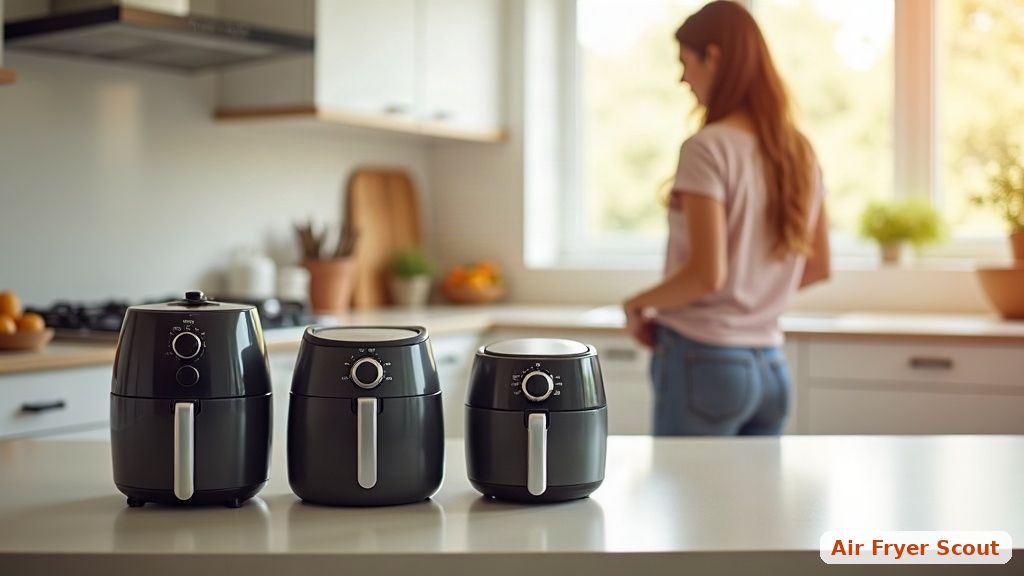
- DualZone / dual-basket (DZ201, Smart XL): two independent drawers with their own temperature and timer, plus a “Smart Finish” that syncs them to end together. The whole point is cooking a protein and a side at once — the feature Ninja is famous for.
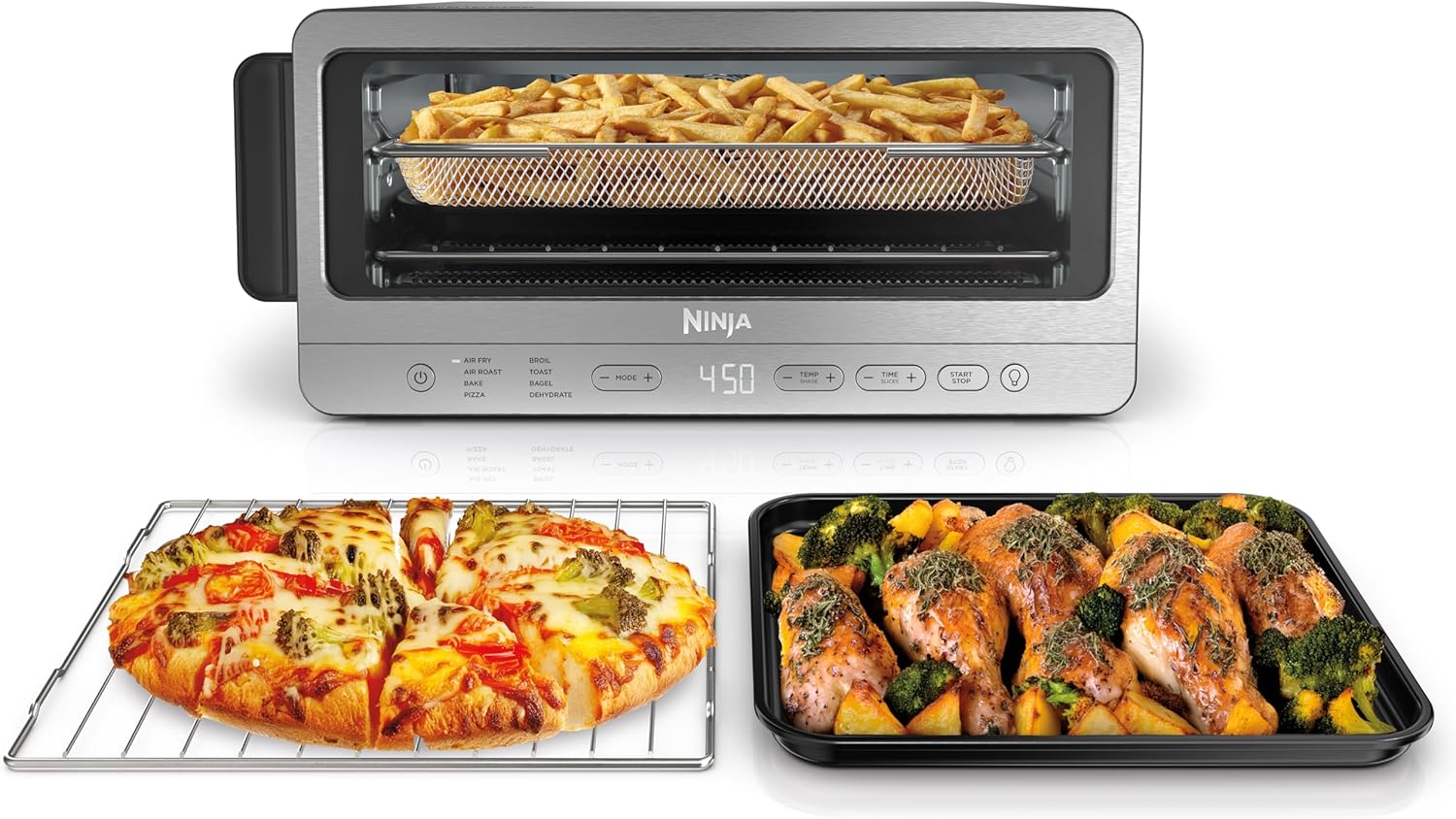
- Oven-style (Flip, and the toaster-oven hybrids): a countertop oven with air-fry mode. Flips up to save counter space; better for flat trays, toast, and larger flat items than a deep basket, but takes more room when open.
Once you know which shape you want, picking the exact model is mostly a capacity decision.
How we picked
This is a research-based comparison built on Ninja’s published specifications and the recurring themes across large samples of recurring owner reviews, cross-checked against how each format actually behaves in a home kitchen. We don’t fabricate a our own direct lab test we didn’t run, and we don’t quote a star rating or price — those move constantly and live on the current Amazon listing, which we link. Where a point rests on specs or owner consensus rather than our own bench test, we say so.
Which Ninja air fryer model is the best?
For most people, the Foodi 8 Qt DualZone (DZ201) is the one to get: two baskets mean dinner for a household finishes in one cycle instead of two, and 8 quarts total is enough for four without being a counter hog. Step up to the 10 Qt Smart XL only if you regularly cook for 5+ or want each drawer big enough for a small chicken. If you almost always cook one thing, skip dual baskets entirely and get the 7 Qt MegaZone — one large surface is easier to load and clean than two smaller ones. We go deeper on that fork in single-basket vs dual-basket air fryers.
Is a Ninja air fryer worth buying?
Yes, for most kitchens — the crisping is consistently good, the presets are genuinely useful, and the build quality holds up in long-term owner reviews. But “worth it” depends on fit: buying a big DualZone when you cook for one is not worth it, and neither is a single basket if your daily problem is “main and side, ready together.” Match the shape to your cooking (above) and it’s an easy yes; buy on model number alone and you’ll overpay.
What are the negatives of a Ninja air fryer?
Being honest about the downsides is the whole point of a buyer’s guide:
- Counter and cabinet footprint. DualZone units are wide and tall; measure your space first. The 10 Qt especially needs clearance above for the exhaust.
- Two baskets = double the washing. Great for cooking two foods, but every cook means two baskets and two crisper plates to clean. Our cleaning guide cuts the routine down.
- Nonstick coatings wear. Like all air fryers, the basket coating degrades over years of metal-utensil contact and dishwasher cycles — hand-wash to extend its life.
- Presets ≠ magic. They’re good starting points, not guarantees; you’ll still learn your unit’s hot spots (see common air fryer mistakes).
Why do some people get rid of their air fryer?
The two most common reasons in owner threads: they bought the wrong size (too small, so everything cooks in frustrating batches — or too big for one person, so it just eats counter space), and they under-used it because they never got past the first soggy batch. Both are avoidable: size to your household (our air fryers for two and family-size guide cover the math), and learn the single-layer + shake habit early.
📚 Related In-Depth Analysis
- Compare findings with our guide on Air Fryer Vs Toaster Oven.
- Compare findings with our guide on Air Fryer Cooking Times Guide.
📚 Related In-Depth Analysis
- Compare findings with our guide on Air Fryer Eggs.
- Compare findings with our guide on How To Clean An Air Fryer.
🔧 Interactive Planning Tool
Need exact measurements for your setup? Use our Air Fryer Basket Sizing & Capacity Engine to Calculate required quart capacity and single-layer basket area for your household.
Capacity cheat-sheet
A quart number only means something relative to how many people you feed:
- 1–2 people, cook one thing: 6–7 Qt single basket (MegaZone / MaxCrisp).
- 2–4 people, want main + side together: 8 Qt DualZone (DZ201) — the default pick.
- 5+ or batch cooking: 10 Qt Smart XL.
- Tight counter / love trays & toast: oven-style Flip.
Match that to the three shapes above and the “which Ninja” question basically answers itself. Whichever you land on, check the live listing for the current price and color, and give your first cook a proper preheat — the difference between “meh” and “why did I wait so long” is usually technique, not the machine.