Air Fryer Safety Tips: The Complete Guide (2026)
As an Amazon Associate I earn from qualifying purchases. Prices and availability are accurate as of the date/time indicated and are subject to change.
🔍 How this guide was put together (Editorial Standards)
This guide compares options using published manufacturer specifications, patterns in publicly visible owner reviews, and reputable expert sources. We do not operate a physical testing lab; see our how-we-research page for details.
EDITOR'S PICKS
Top Picks


📑 Table of contents
- Placement — most safety comes from where you put it
- During cooking
- Coatings and materials
- Electrical safety
- Smoke: causes and fixes
- Family safety
- When you should NOT use an air fryer
- The 60-second safety check
- Kids-in-the-kitchen ages
- What experienced users have but manuals don’t emphasize
- Frequently asked questions
Air fryers are inherently safer than a pot of hot oil, but they run very hot and have their own hazards worth understanding. This guide covers placement, during-cooking safety, coating protection, electrical, and family-safety habits — the complete practical safety picture, ordered by how likely each issue is to actually cause a problem.
Placement — most safety comes from where you put it
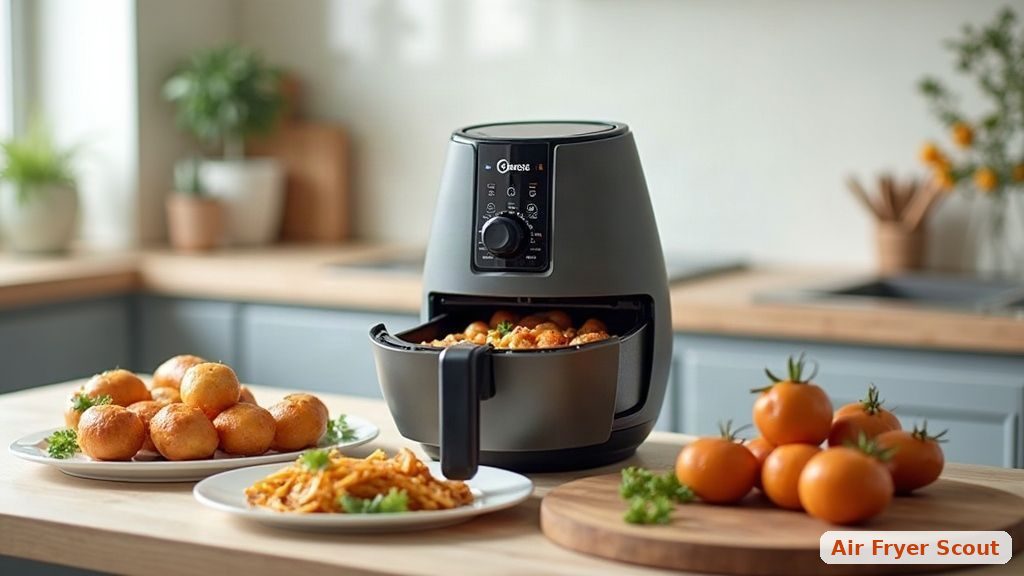
Clearance around the unit
- 10 cm minimum at the back and top for hot-air exhaust.
- Never push against a wall or under a cabinet without space — trapped heat can damage cabinetry and shorten element life.
- Heat-resistant, stable surface — not on a cutting board that could tip, not on painted MDF that could scorch.
Away from hazards
- Not directly under smoke detectors (fatty foods can trigger them).
- Not next to towels, dishcloths, or paper — a shifted cloth can catch hot exhaust.
- Cords away from the hot body — running the cord over the top of the unit will melt the insulation.
During cooking
Steam burns are the most common injury
When you pull out the basket, hot steam blasts upward. Every year people burn their face or hands by leaning over the basket at the pull.
- Angle the basket away from your face as you pull.
- Let steam vent 5 seconds before reaching in.
- Use oven mitts for the drawer handle if it heats up.
Grease + fatty foods
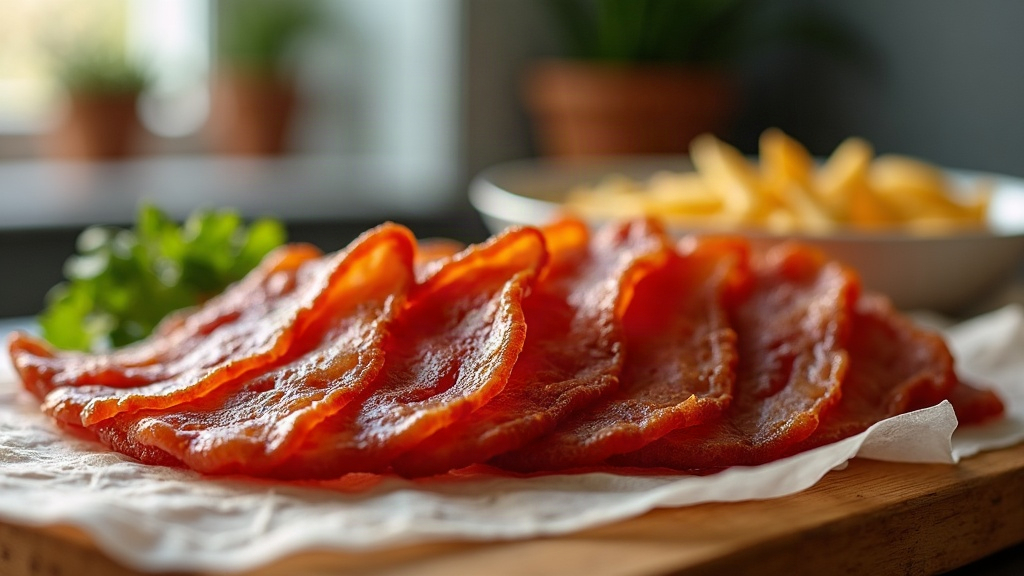
Bacon, sausages, and fatty cuts drip grease onto the hot element and can smoke — occasionally ignite (rare but real).
- Never leave fatty foods unattended.
- Add a tablespoon of water to the drawer for bacon and similar — stops grease from smoking as it drips.
- Clean the element regularly so grease doesn’t accumulate.
Blast of hot air on opening
- Modern air fryers pause when you pull the drawer — safe to check food mid-cook.
- Older units may keep running — pull, check, close quickly.
Coatings and materials
The non-stick coating
Damaged non-stick coatings can flake into food; flakes shouldn’t be eaten.
- No metal utensils or steel wool — they gouge the coating.
- Don’t run empty at high heat for long — degrades the coating.
- If you see flaking or scratches to the metal underneath, replace the basket immediately.
Accessories
- Only accessories rated for your unit’s max temperature — cheap generic silicone can off-gas at high heat.
- No plastic in the basket — melts.
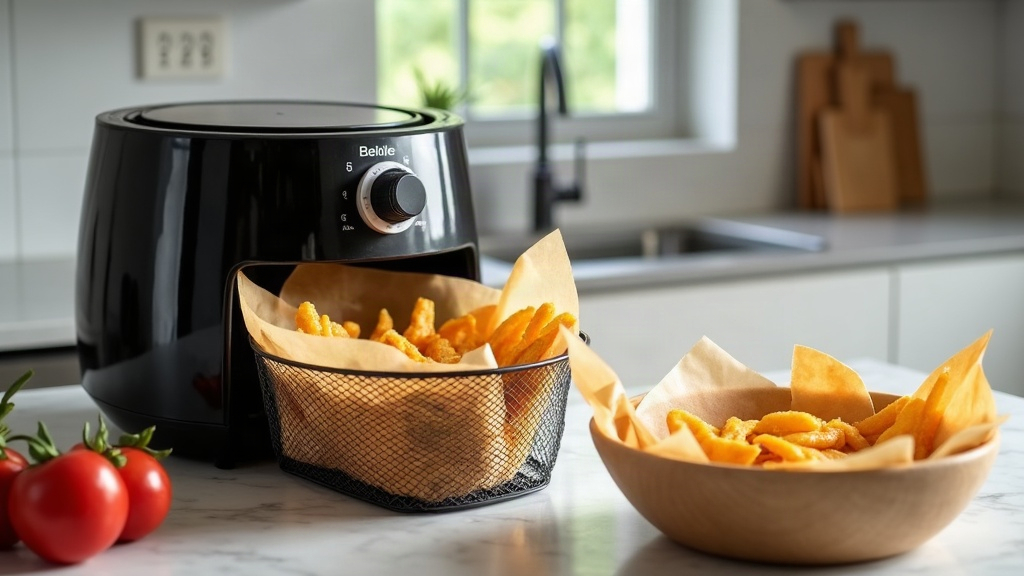
- Foil is OK if perforated or wrapped only around food (never blocking large airflow paths, never touching the heating element).
Our accessories guide covers what’s safe.
Electrical safety
- Plug directly into a wall outlet where possible. Air fryers draw a lot of current (10-15A on 120V, 6-8A on 230V).
- Avoid thin extension leads — they can overheat under sustained load.
- Shared power strips with other high-draw appliances (kettles, microwaves) can trip breakers or overheat.
- Unplug when not in use and before cleaning — never wash a plugged-in unit.
⚠️
Never submerge the main bodyThe main housing contains the electronics. Even if it "looks" wipeable, water inside creates a shock risk on next use. Only the removable basket and drawer are washable.
Smoke: causes and fixes
Smoke is almost always fixable, not a broken machine:
- Grease on the heating element → cool, unplug, wipe with damp cloth.
- Full drip tray → empty it.
- Fatty food dripping → add water to drawer.
- Aerosol spray residue → use a pump mister instead; deep-clean current residue.
- New unit “burn-in” smell → run empty at high temp for 5 minutes in a well-ventilated kitchen (one-time only).
Persistent smoke with clean unit + non-fatty food = time for service.
Family safety
Kids and pets
- Exterior and vented air get very hot. Position out of children’s reach.
- Don’t leave a hot unit unattended near curious kids or pets.
- Teach kids “hands off” specifically — kitchen safety isn’t intuitive.
- The cord dangling off the counter is a pull hazard for toddlers — route it back or secure it.
For elderly users
- A lightweight, easy-to-grip basket handle matters if arthritis or grip strength is an issue. Check reviews for handle ergonomics.
- A model with clear digital display (not tiny buttons) is easier.
When you should NOT use an air fryer
- In a small enclosed space with no ventilation.
- On a wooden surface without a heat-resistant mat.
- With a damaged cord or after any incident where water entered the main body.
- If the coating is visibly flaking — replace the basket first.
- In a vehicle or RV without dedicated high-current wiring.
The 60-second safety check
Before every cook:
- Unit on a heat-resistant, stable surface with clearance? ✓
- Cord fully extended, not routed over hot body? ✓
- Basket clean, no old grease? ✓
- Element area clear of debris? ✓
- Nothing flammable within 30 cm? ✓
Weekly:
- Wipe the heating element (cool, unplugged).
- Check cord for wear or damage.
- Inspect basket coating.
Kids-in-the-kitchen ages
- Under 8: no unsupervised use.
- 8-12: can start food, adult must handle the hot basket/pulls.
- 13+: can operate independently after training.
What experienced users have but manuals don’t emphasize
- A silicone trivet to set the hot basket on after cooking.
- A dedicated pair of long silicone-tipped tongs for safer basket access.
- A folded towel next to the fryer as a habit — always ready if anything drips or spills.
📚 Related In-Depth Analysis
- Compare findings with our guide on Best Air Fryer For Family.
- Compare findings with our guide on How To Clean An Air Fryer.
📚 Related In-Depth Analysis
- Compare findings with our guide on Air Fryer Reheating Guide.
- Compare findings with our guide on Self Cleaning Air Fryer.
🔧 Interactive Planning Tool
Need exact measurements for your setup? Use our Air Fryer Basket Sizing & Capacity Engine to Calculate required quart capacity and single-layer basket area for your household.
Frequently asked questions
Why are people getting rid of their air fryers? Most commonly: counter space vs actual use frequency. An air fryer that’s used 2-3×/week earns its spot; used once a month, it doesn’t. The other common reason: non-stick coating started to flake and owners assumed they couldn’t replace just the basket. Most brands sell replacement baskets for $20-40. See our cleaning guide for coating care.
Is my air fryer a fire hazard? Very low risk with proper use. The main real risk is grease accumulating on the heating element — resolved by regular cleaning. Our cleaning guide covers the element cleaning method. The other risk (aerosol oil sprays degrading non-stick) is solved by switching to a pump mister. Standard kitchen fire rules apply: don’t leave unattended with fatty foods.
Can I use an air fryer indoors without a range hood? Yes for most cooks; turn on your hood or open a window for anything with heavy grease (bacon, sausages, wings).
Is it safe to cook multiple times back-to-back? Yes — the unit is designed for continuous use. Let it cool 5 minutes between batches for easier handling only.
Can the exhaust burn a cabinet above it? Yes if too close over months. Keep 10+ cm clearance.
Do air fryers cause house fires? Very rarely, and almost always from grease-on-element ignition in dirty units. Regular cleaning eliminates the risk.
Can I leave the house while it’s running? Not recommended — most kitchen fires happen with unattended cooking. Set a timer and check on it.
Related: how to clean an air fryer · mistakes to avoid · accessories guide
Related: Using foil safely in an air fryer