Air Fryer vs Convection Oven: The Real Difference (2026)
As an Amazon Associate I earn from qualifying purchases. Prices and availability are accurate as of the date/time indicated and are subject to change.
🔍 How this guide was put together (Editorial Standards)
This guide compares options using published manufacturer specifications, patterns in publicly visible owner reviews, and reputable expert sources. We do not operate a physical testing lab; see our how-we-research page for details.
EDITOR'S PICKS
Top Picks


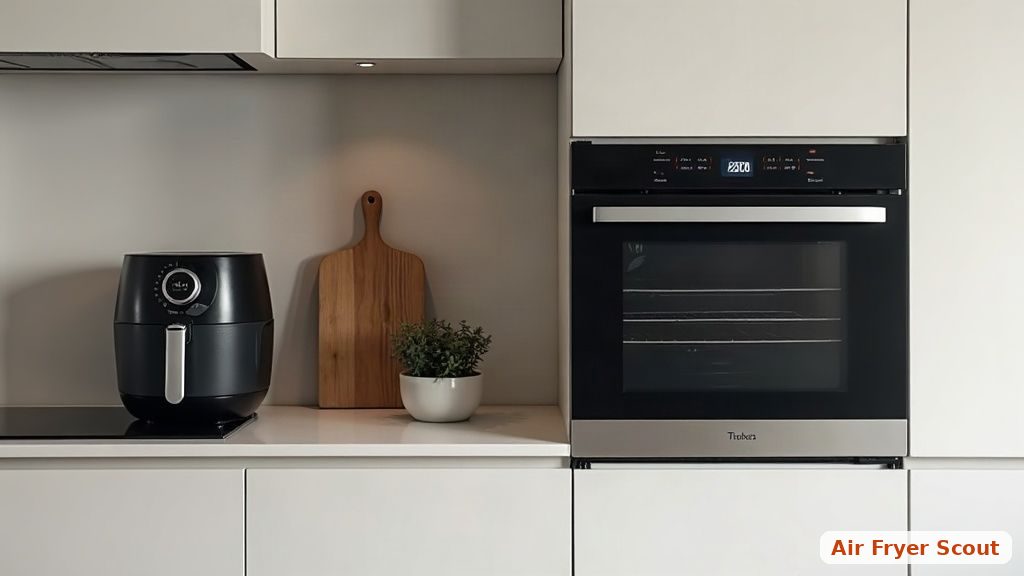
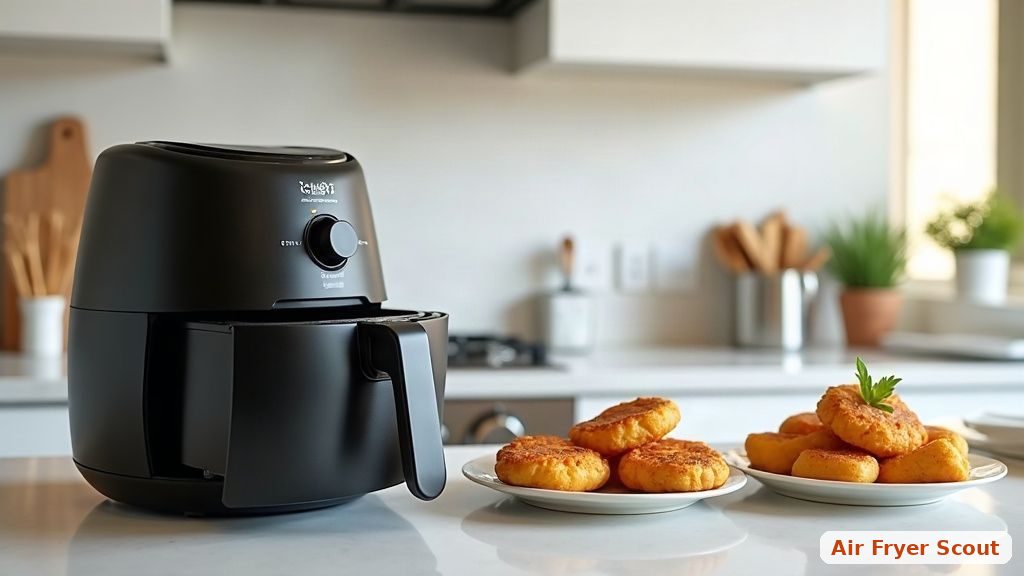
If you’ve ever wondered whether an “air fryer” is anything more than marketing for a small convection oven, you’re asking the right question. Mechanically they’re the same idea — a heating element plus a fan blowing hot air around food. The differences are real, but they’re about size, speed, and airflow geometry, not about whether one “fries” and the other doesn’t. Neither actually fries anything.
The physics is identical
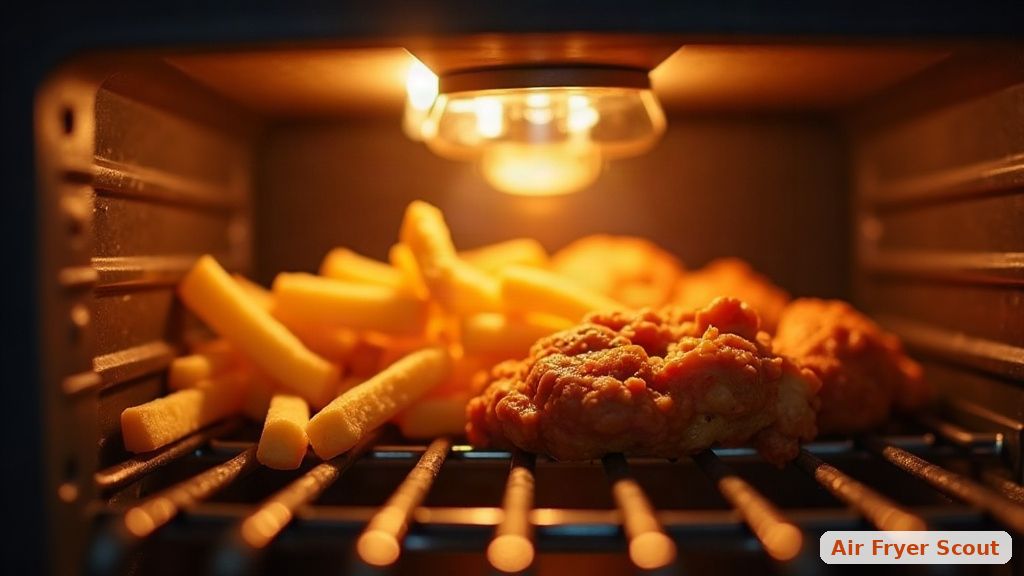
Both appliances cook by forced convection: a fan pushes hot air past food, and moving air transfers heat much faster than still air (this is the same reason a windy day feels colder than a still day at the same temperature). Faster heat transfer means browning, crisping, and dehydration happen faster than in a normal (radiant/still-air) oven.
So an air fryer is literally a small convection oven. What makes it feel different in the kitchen is the size and shape of the cooking chamber — and that changes the practical experience in three specific ways:
| Factor | Air fryer | Convection oven |
|---|---|---|
| Cavity size | Small (2–10 qt) | Large (40–70 qt) |
| Preheat time | 2–4 min (or skip) | 10–15 min |
| Airflow speed at food | High, concentrated | Moderate, spread out |
| Crispness per square inch | Higher | Lower |
| Capacity per batch | 1–2 servings | Family meal / multi-tray |
| Energy per cook | Low (small cavity) | Higher (heats big cavity) |
The small cavity is the whole story. A small cavity heats fast, wastes little energy, and concentrates the airflow — which is why fries out of an air fryer are crispier and faster than fries out of a big convection oven set to the same temperature. The trade-off is you can’t cook a Sunday roast or six trays of cookies at once.
Isn’t a convection oven with an “air fry” mode the same thing?
Getting closer. Newer ovens have an “Air Fry” mode that runs the fan harder and adds a convection cycle — a fair simulation of an air fryer in the oven you already own. Two practical catches:
- Preheat still takes 10+ minutes because the cavity is huge. You lose the “throw fries in and they’re done in 12 minutes” convenience.
- Airflow near the food is weaker than in a purpose-built basket — food further from the fan browns less evenly.
If your convection oven has an Air Fry mode and you don’t mind the preheat, it can handle 80–90% of what a countertop air fryer does. If you cook small crispy meals often and want speed, a dedicated air fryer wins on convenience even though it’s technically redundant.
Which one browns better?
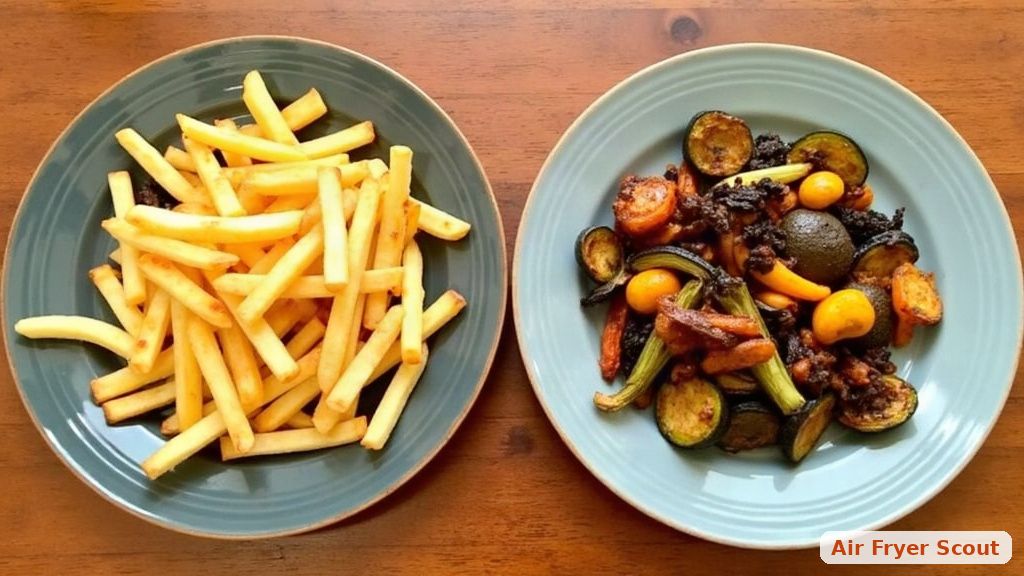
Air fryer, per square inch of food surface — because the airflow is concentrated in a smaller volume. But a convection oven can brown more food at once. If you’re crisping a serving of wings, air fryer wins. If you’re crisping four trays of sheet-pan vegetables, the oven wins. This is the whole trade of speed-per-item vs total-throughput.
Do you save energy with an air fryer?
Yes for small meals, no for large ones. The math is simple: an air fryer draws similar wattage to a convection oven but for a much shorter time and heats a much smaller cavity. For a single-basket cook it uses maybe a quarter of the electricity of the same recipe in a full-size oven. But if you’re cooking a whole tray of chicken for a family, the oven cooks it all at once — and one big cook usually beats three air-fryer batches. We break down the specifics in do air fryers use a lot of electricity.
Which one should you actually buy?
Almost nobody replaces one with the other — most kitchens end up with both, because they solve different problems. If you’re deciding what to add next:
| Buy an air fryer if | Buy a convection oven if |
|---|---|
| You cook for 1–3 people most of the time | You cook for 4+ or entertain |
| You want small crispy meals fast | You want multi-tray capacity |
| Counter space is tight but oven-lite ok | You'd use it as a primary oven |
| You reheat leftovers often (see reheating guide) | You do a lot of baking |
| Your regular oven is fine but slow to preheat | You need a proper oven replacement |
If you already own a convection oven and are debating an air fryer, the question is really: how often do I make small, quick, crispy things? If the answer is “most weekdays,” it’s worth counter space. If the answer is “occasionally,” an Air Fry mode on your existing oven probably covers it.
For picks by capacity (the number that matters most once you decide on air fryer), see our family capacity guide or the compact end in small kitchens.
📚 Related In-Depth Analysis
- Compare findings with our guide on How To Clean An Air Fryer.
- Compare findings with our guide on Air Fryer Vs Microwave.
📚 Related In-Depth Analysis
- Compare findings with our guide on Self Cleaning Air Fryer.
- Compare findings with our guide on Best Air Fryer For Family.
🔧 Interactive Planning Tool
Need exact measurements for your setup? Use our Air Fryer Basket Sizing & Capacity Engine to Calculate required quart capacity and single-layer basket area for your household.
The bottom line
An air fryer is a small convection oven — same physics, different geometry. The small cavity gives you speed and per-item crispness; the big cavity gives you capacity. Skip the marketing and buy by the practical question: what size batch do you cook most often? Small batches → air fryer. Family batches → convection oven. If you cook both, own both — they’re not competing for the same job.