Air Fryer with Rotisserie: Worth It, or Just a Bigger Basket?

As an Amazon Associate I earn from qualifying purchases. Prices and availability are accurate as of the date/time indicated and are subject to change.
🔍 How this guide was put together (Editorial Standards)
This guide compares options using published manufacturer specifications, patterns in publicly visible owner reviews, and reputable expert sources. We do not operate a physical testing lab; see our how-we-research page for details.
EDITOR'S PICKS
Top Picks


📑 Table of contents
Rotisserie air fryers — the larger oven-style units with a spinning spit — cost noticeably more than basket-only models. The rotisserie function genuinely earns that premium for specific foods and gets ignored entirely for others. Here’s the honest breakdown.
What rotisserie actually does
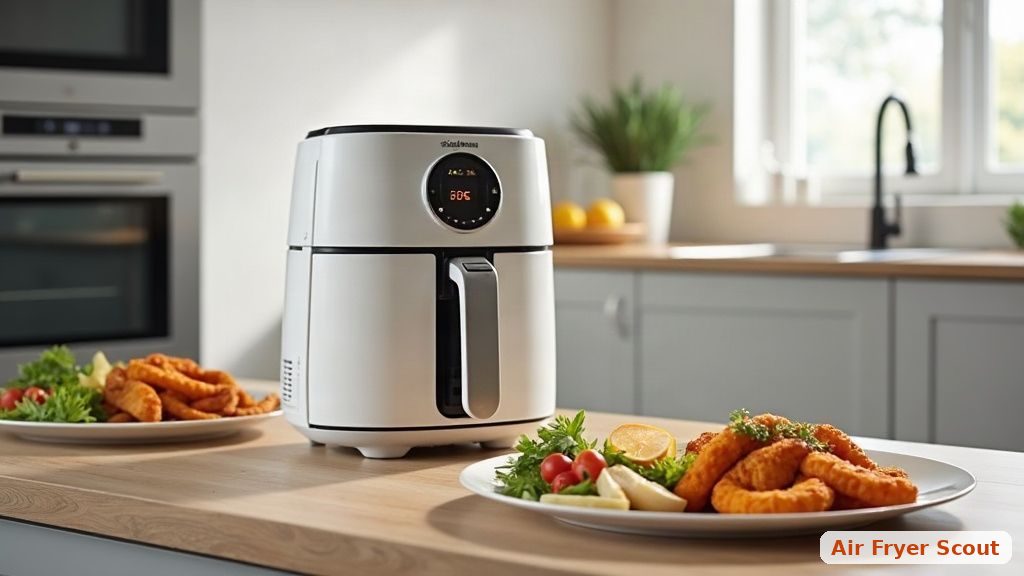
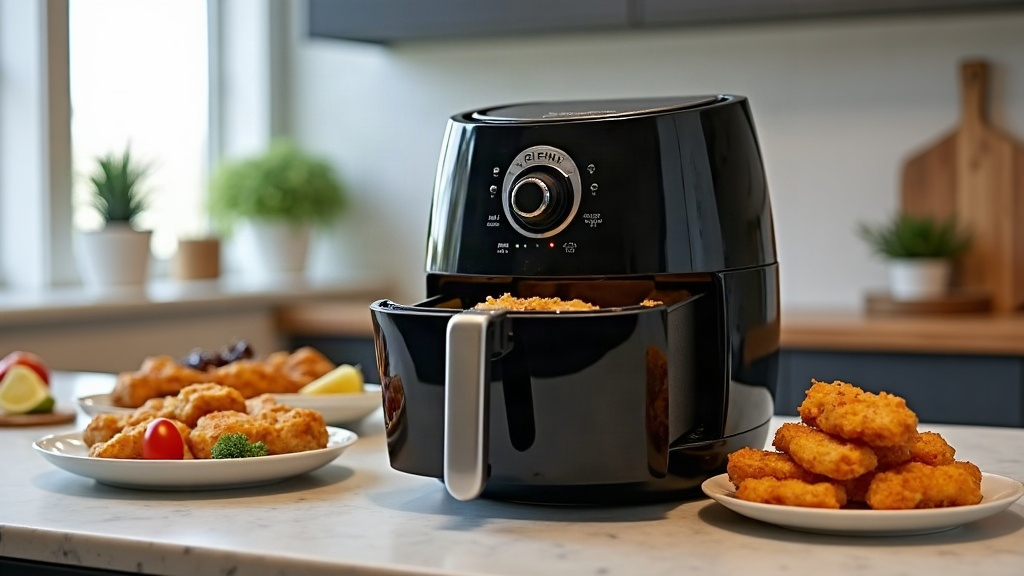
A rotating spit turns food continuously through the hot air, basting it in its own rendered fat as it turns. This produces more even browning on round or irregularly-shaped foods than a static basket, where the bottom-contact side cooks differently than the top.
Where rotisserie genuinely wins
Whole chicken: the single food rotisserie is built for. Even browning on all sides, self-basting from rendered fat, skin crisps uniformly instead of one side staying pale where it touched the basket.
Roasts (beef, pork loin): similar benefit — even crust on a round cut that a flat basket can’t replicate.
Kebabs on skewers: rotisserie attachments handle skewers well, rotating multiple at once for even char.
Where rotisserie adds nothing
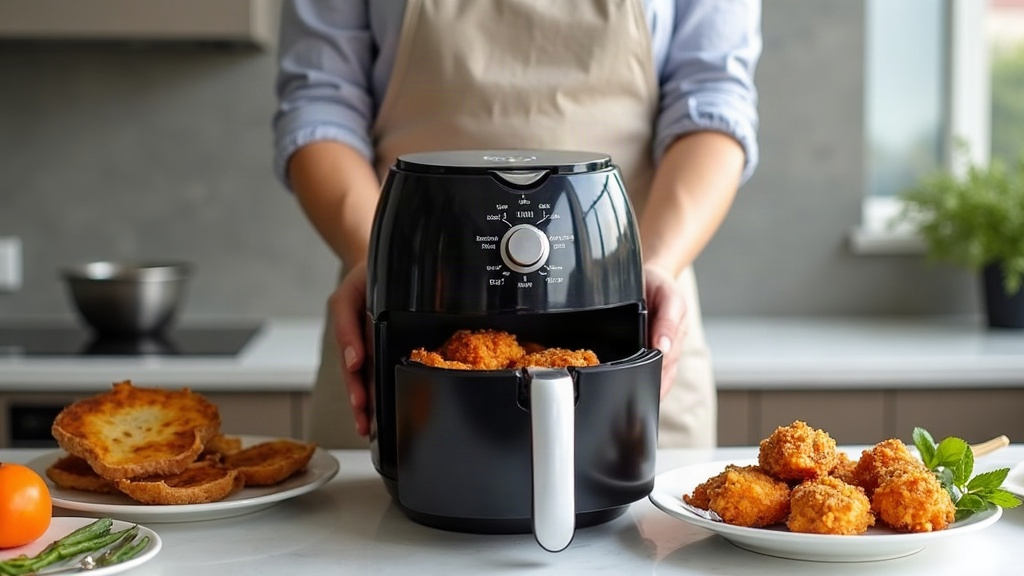
Fries, nuggets, vegetables: anything you’d shake in a basket doesn’t benefit from a spit — these foods are already irregular and small enough that basket shaking achieves the same even-cooking result.
Anything liquid-adjacent or breaded in wet batter: rotisserie spits don’t hold sauced or battered foods well; they’re built for foods that can be skewered or clamped.
Honest owner pattern: across owner reviews, rotisserie attachments get used regularly by people who cook whole chickens or roasts often (weekly), and gather dust for people who bought the unit mainly for everyday basket cooking. Buy for the rotisserie only if whole-bird cooking is a real habit, not an occasional idea.
Size and capacity tradeoff
Rotisserie air fryers are physically larger (oven-style, not basket-style) to accommodate the rotating mechanism and a full chicken. This means:
- More counter space required
- Longer preheat time than a compact basket unit
- Usually higher wattage, faster cook times for large items
If counter space is tight, see our smallest air fryers guide — rotisserie units are the opposite end of that spectrum.
FAQ
Is a rotisserie air fryer worth the extra cost? Only if you regularly cook whole chickens, roasts, or kebabs — the foods that actually benefit from continuous rotation. For basket staples (fries, nuggets, vegetables), the rotisserie function adds cost without adding value.
Can you still use a regular basket in a rotisserie air fryer? Most rotisserie/oven-style units include a removable basket or tray alongside the spit attachment, so yes — you get both cooking styles in one unit.
Does rotisserie chicken taste different from basket-cooked chicken? The skin browns more evenly on a rotisserie since every side gets equal contact with heat and self-basting fat. A basket-cooked whole chicken needs manual flipping to achieve similar evenness.
How long does a whole chicken take on rotisserie? Roughly 45-60 minutes for a 1.5-2kg chicken at 175°C/350°F, depending on the unit’s wattage — always confirm with a thermometer (74°C internal) rather than time alone.
Is rotisserie the same as convection/air fry mode? No — rotisserie is a physical rotating mechanism; convection/air fry refers to the hot-air circulation method. Many rotisserie units combine both, but they’re separate features.
📚 Related In-Depth Analysis
- Compare findings with our guide on Air Fryer Vs Toaster Oven.
- Compare findings with our guide on Air Fryer Vs Deep Fryer.
📚 Related In-Depth Analysis
- Compare findings with our guide on How To Preheat Air Fryer.
- Compare findings with our guide on What To Cook In Air Fryer First.
🔧 Interactive Planning Tool
Need exact measurements for your setup? Use our Air Fryer Basket Sizing & Capacity Engine to Calculate required quart capacity and single-layer basket area for your household.